
 See Other News
In modern warfare, where precision, speed, and coordination are paramount, one critical threat often goes overlooked: excessive battlefield noise. From the thunder of tracked vehicles to the crack of gunfire and blast of explosive ordnance, high-decibel environments are a constant reality for deployed personnel.
Continue Reading
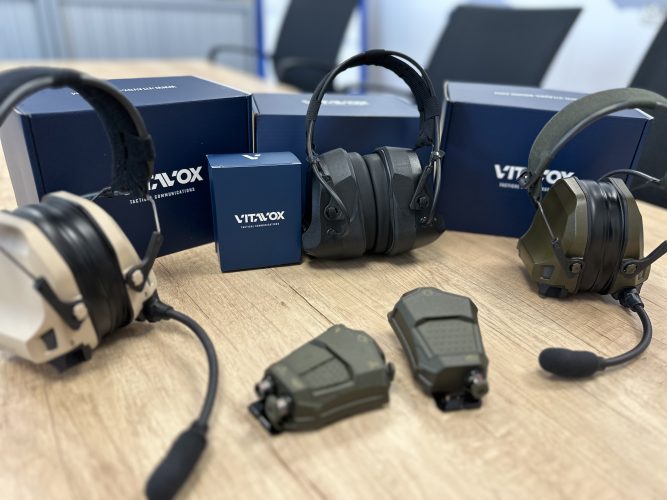
Understanding the risks of battlefield noise exposure and how tactical audio systems enhance safety, communication, and operational effectiveness.
Without adequate tactical helmet hearing protection, this noise isn’t just a nuisance — it’s a serious risk to combat effectiveness, force protection, and long-term health. Unprotected exposure to harmful sound levels can lead to permanent hearing loss, degraded situational awareness, and compromised communication across operational teams.
That’s why military hearing protection systems have evolved beyond basic PPE. Today’s solutions — such as the Vitavox ViTac™ Personal Communication System — integrate active noise reduction (ANR), secure voice transmission, and situational awareness features into a single platform. These systems are engineered for mounted, dismounted, and naval operations, providing protection without isolating users from their command structures or environment.
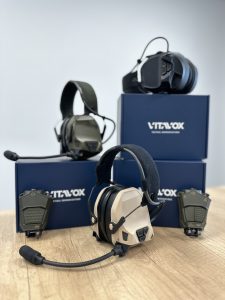
This article outlines the operational risks of noise exposure, the strategic role of combat communication headsets, and how integrated solutions from UK defence manufacturers are helping protect lives, prevent injury, and ensure mission success in the harshest theatres.
High-decibel exposure is one of the most pervasive and underestimated threats in modern military operations. From dismounted patrols to naval deployments and mechanised combat, military personnel face constant exposure to sound levels that exceed occupational safety limits — often by a wide margin.
Whether during active engagements or routine operations, hazardous noise can degrade communication, reduce reaction speed, and cause permanent hearing loss. The consequences are both immediate and long-term, impacting mission effectiveness and soldier wellbeing.
Even short-term exposure to these sound sources can result in:
Operational Consequences of Hearing Loss on the Battlefield
In combat, degraded hearing isn’t a health issue — it’s an operational failure point. Without protection:
ViTac™ systems counteract this by maintaining communication clarity under fire — with integrated ANR, talk-through awareness, and radio interoperability across all mission profiles..
To counteract these threats, defence forces are adopting tactical hearing protection as standard operational equipment. Systems like the Vitavox ViTac™ Personal Communication System combine active noise reduction (ANR) with integrated comms — enabling personnel to hear what matters while blocking what doesn’t.
By preserving communication clarity in hostile environments, noise-cancelling tactical headsets support both immediate tactical performance and long-term auditory health.

In high-tempo combat operations, the ability to hear, interpret, and act on audio cues in real time is not a luxury — it’s a battlefield requirement. Whether coordinating an assault, maintaining formation under fire, or reacting to new threats, degraded hearing can compromise both individual and unit performance. That’s why tactical helmet hearing protection is now considered essential equipment across UK and NATO forces.
Clear, uninterrupted communication is vital for manoeuvring, relaying instructions, and synchronising with command structures. Unprotected personnel or those already experiencing noise-induced hearing loss may:
Combat communication headsets with situational awareness and active noise reduction (ANR) help mitigate these risks — ensuring clarity, speed, and cohesion under fire.
A single missed cue — a shouted warning, a subtle noise from enemy movement, or an approaching aircraft — can escalate into a life-threatening situation. In environments where split-second decisions are required, degraded auditory perception increases the risk of friendly-fire incidents and operational breakdowns.
Integrated tactical audio systems reduce communication friction during:
By ensuring all personnel hear the same information at the same time, these systems enhance force coordination and mission survivability.
Noise-related hearing loss and tinnitus are among the most prevalent service-related injuries in the UK armed forces. These injuries not only diminish quality of life for veterans but also strain MOD medical services and increase long-term healthcare costs.
As a result, the Ministry of Defence now views hearing protection military systems not just as PPE, but as a cost-saving, readiness-enhancing investment. Vitavox tactical headsets — including the ViTac™ Personal Communication System — are engineered to meet this dual mandate: safeguarding hearing while enhancing operational communication.
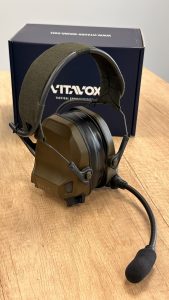
In today’s multi-domain operations — spanning land, sea, air, and cyber — hearing protection is no longer just a health safeguard; it is a fundamental enabler of tactical communication and mission success. Integrated tactical helmet hearing protection systems now serve as critical components in ensuring command clarity, force coordination, and operational survivability.
Legacy hearing protection, such as foam earplugs, provided basic shielding from battlefield noise but often came at the cost of situational awareness. In contrast, modern military headset systems are designed to:
Systems like the Vitavox ViTac™ Personal Communication System combine active noise reduction (ANR) with talk-through situational awareness, allowing personnel to stay alert, connected, and responsive — whether operating inside an armoured fighting vehicle or conducting foot patrols in urban terrain.
The UK Ministry of Defence and NATO procurement bodies have moved decisively toward integrated solutions that support both hearing protection military standards and robust communications infrastructure. Key compliance criteria include:
Standalone earplugs no longer satisfy these evolving battlefield demands. As a result, combat communication headsets that offer scalable integration and modular design are now standard across procurement briefs.
Vitavox tactical headsets are engineered to meet and exceed these stringent military specifications. Developed in the UK and trusted by MOD and NATO forces, our headsets provide:
By merging tactical hearing protection with mission-critical audio performance, Vitavox helps ensure that UK and allied forces are equipped to fight, communicate, and survive in the world’s most hostile acoustic environments.
When it comes to tactical helmet hearing protection, the priority is clear: protect personnel from hazardous noise while maintaining crystal-clear communication. Vitavox delivers this through purpose-built headsets designed for integration, comfort, and combat resilience.
Vitavox’s tactical headsets utilise Active Noise Reduction (ANR) to suppress impulse noise from gunfire, IEDs, and engine systems without compromising voice clarity. Unlike legacy earplugs or isolated hearing protection, these systems allow users to:
Built-in situational awareness microphones offer 360° environmental listening, enabling operators to stay connected to their surroundings even when fully protected.
Vitavox headsets are engineered to integrate seamlessly with ballistic helmets, combat uniforms, and communications systems — including vehicle intercoms and radio nets. Key integration benefits include:
This modularity ensures operators can transition between mounted and dismounted roles without changing equipment — supporting mission continuity and reducing operational downtime.
Whether deployed in the hull of a naval vessel, the turret of an AFV, or on foot during urban counterinsurgency, Vitavox headsets are designed to endure:
With sealed electronics, military-grade housing, and field-repairable components, these systems are built to last — and protect — in even the harshest operational theatres.
Tactical Communications Headsets – Military Headsets – Tactical Hearing Protection by Vitavox Sound
Hearing protection isn’t just about long-term health — it’s a critical enabler of combat performance across all environments. Vitavox tactical helmet hearing protection is already in active use across MOD and NATO platforms, supporting real-time operations and enhancing safety in high-threat conditions.
In tracked and wheeled combat vehicles, noise levels from engines, transmissions, and weapons can exceed safe thresholds in seconds. Vitavox headsets provide:
This allows gunners, commanders, and drivers to coordinate under fire without exposure to harmful decibels — while maintaining full battlefield awareness.
Naval platforms face constant high-decibel threats from:
Vitavox hearing protection ensures that bridge teams, engineering staff, and boarding parties can operate safely across decks, in engine spaces, and during amphibious ops — while staying connected to command systems and each other.
On foot, especially in urban or confined environments, situational awareness is vital. Vitavox headsets allow dismounted soldiers to:
Whether conducting a patrol, securing a building, or entering a compound, soldiers remain protected — but not cut off — from their environment.
Vitavox is more than a manufacturer — it’s a long-standing defence partner trusted by the MOD and NATO to deliver communication systems that perform under fire, across all domains. Our tactical hearing protection solutions are engineered for mission success, long-term value, and seamless integration with broader defence communication networks.
Every Vitavox headset is designed, manufactured, and tested in the UK to meet stringent MOD and NATO requirements. This ensures:
Our systems are in active deployment across land, sea, and amphibious operations — from armoured fighting vehicles to Royal Navy platforms.
Vitavox hearing protection isn’t a standalone solution — it’s part of a fully integrated communication ecosystem. Our headsets work seamlessly with:
This end-to-end compatibility ensures reliable, uninterrupted communications even in high-noise, high-stress environments — without compromising safety or situational awareness.
With over 90 years of defence audio innovation, Vitavox systems have been:
Whether you’re specifying equipment for a new vehicle platform or upgrading legacy systems, Vitavox offers dependable, scalable, and service-ready hearing protection — built to last through the full life of your platform.
[Contact Vitavox for Product Specifications and Defence Integration Support]
Vitavox tactical headsets incorporate advanced Active Noise Reduction (ANR) and impulse noise suppression technologies to protect against high-decibel threats such as small arms fire, artillery, and engine noise. They are designed to meet MOD hearing protection standards while enabling clear voice communication in demanding operational environments.
Yes. Vitavox headsets are modular and helmet-compatible, designed for integration with a range of ballistic and non-ballistic combat helmets. Whether for dismounted infantry, naval boarding teams, or vehicle crews, our systems ensure ergonomic fit without compromising protection or communication clarity.
Vitavox hearing protection solutions are engineered to work seamlessly with MOD-standard communication systems, including:
This interoperability ensures users maintain secure, reliable, and mission-ready communication across all operational scenarios.
